Events

Rooms I've
run

Hosting, moderating, and building the formats — from a TEDx stage in the Financial District to a stablecoin crisis simulation with every seat of the system represented.

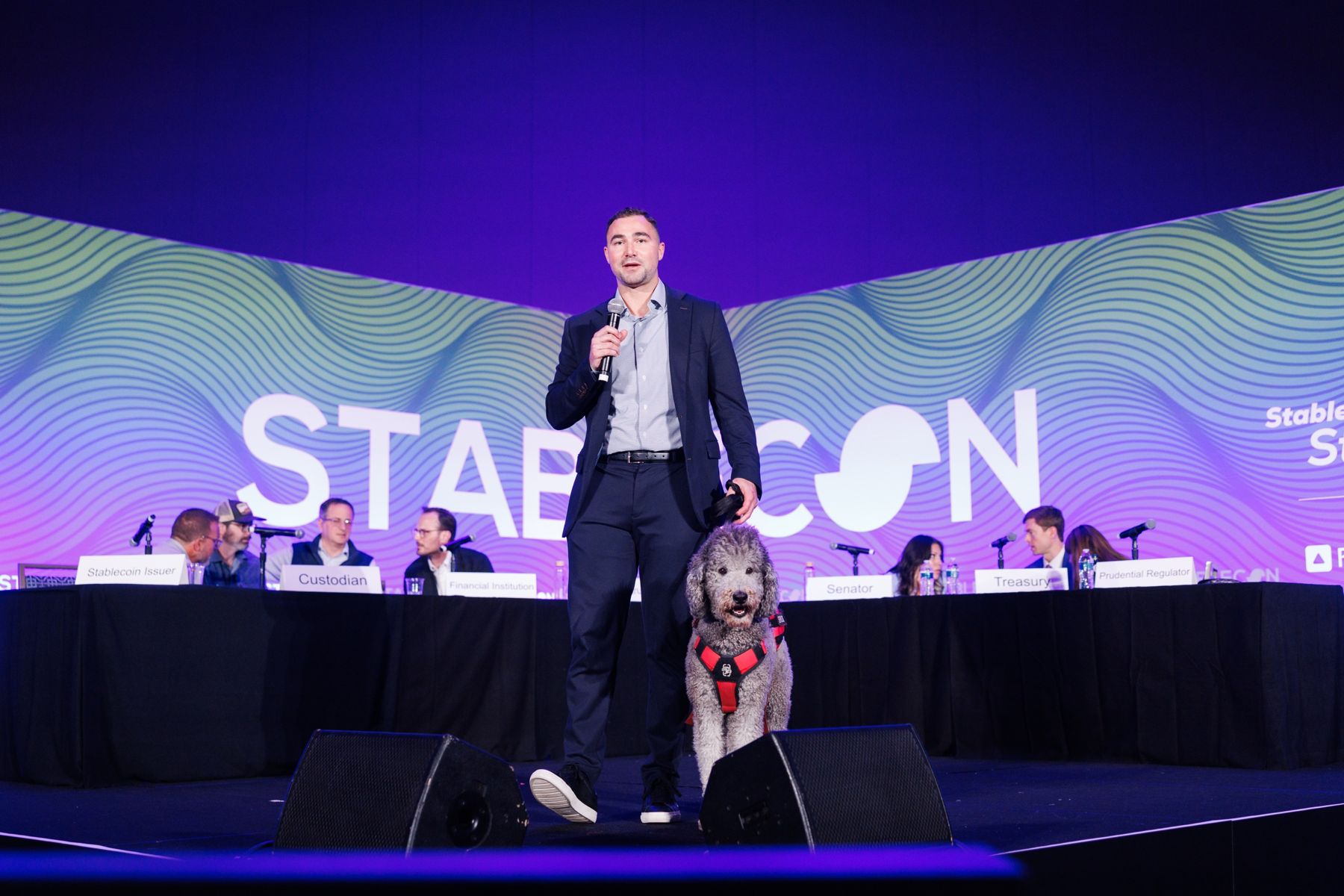
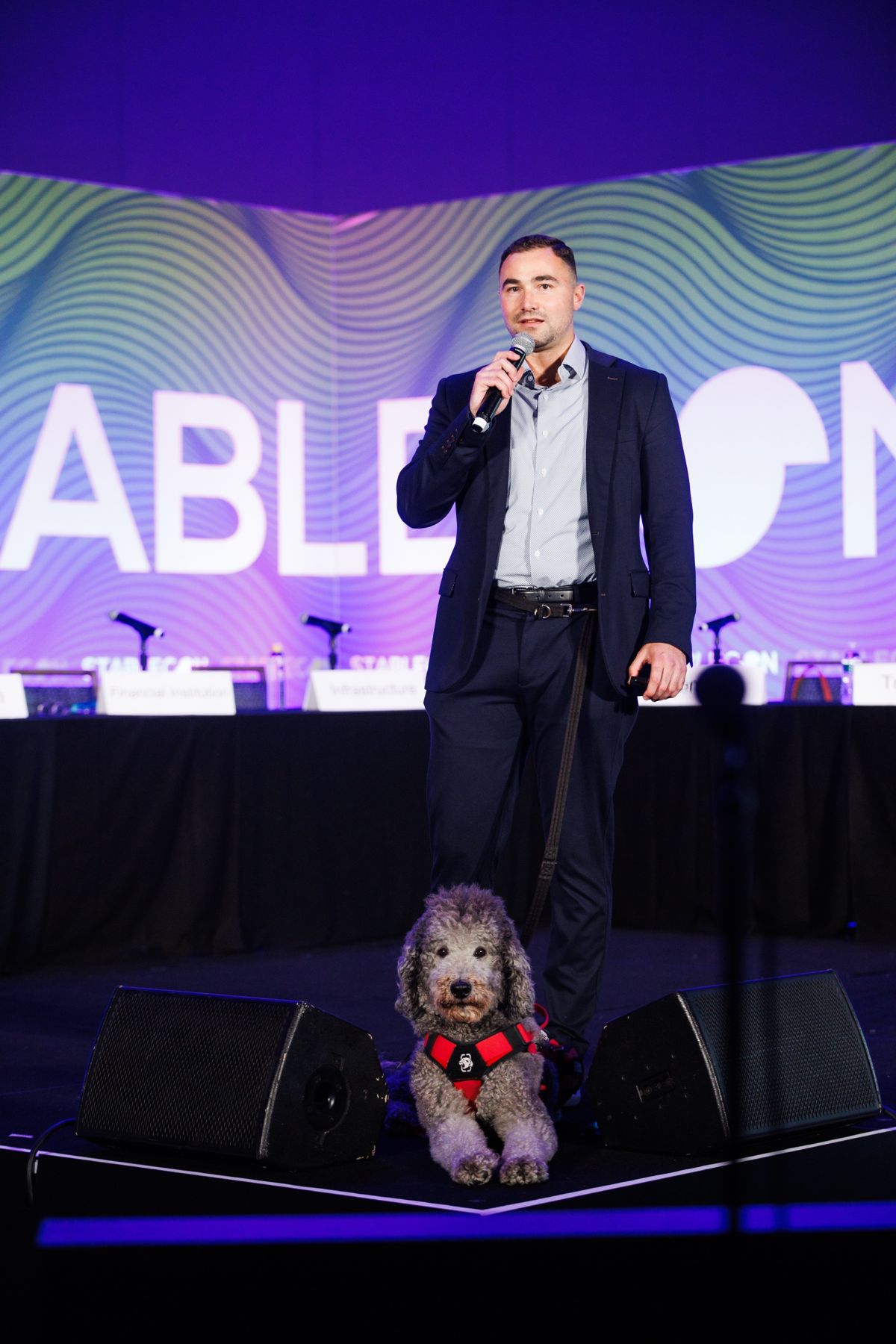
Dominic on the StableCon main stage with panelists seated behind placards reading Stablecoin Issuer, Custodian, Financial Institution, Senator, Treasury, and Prudential Regulator Dominic speaking at StableCon with his service dog Blaze at the front of the stage
StableCon USA 2026 · 10 September 2026

10 September 2026 · StableCon USA 2026

Stablecoin crisis simulation

Host, moderator & crisis directorStablecoinsLive simulation

A live, role-played stablecoin crisis. Every seat of the system was represented behind its own placard — and each had to answer to the others in real time as the scenario unfolded.

Stablecoin issuer
Custodian
Financial institution
Senator
Treasury
Prudential regulator

We invented a stablecoin, USDQ, and put it through the worst day of its life. The scenario opened with a cross-chain bridge exploit modeled on the KelpDAO attack. Reserves came up short, and USDQ depegged under the weight of its own undercollateralization.

From there the panelists had to solve it in real time, while we fed them updates from regulators around the world — each reacting to the depeg, the shortfall, and the contagion spreading to everything that had accepted USDQ as collateral. No prepared remarks, no agreed sequence of events, and no way to defer a decision to a working group.

The format does what a panel can't: it forces the participants to stop describing their positions and start negotiating them. The interesting question was never whether stablecoins belong in the financial system — it was who answers for it when something breaks, and how fast.

A panel tells you what each side believes. A simulation shows you what each side does when the clock is running.
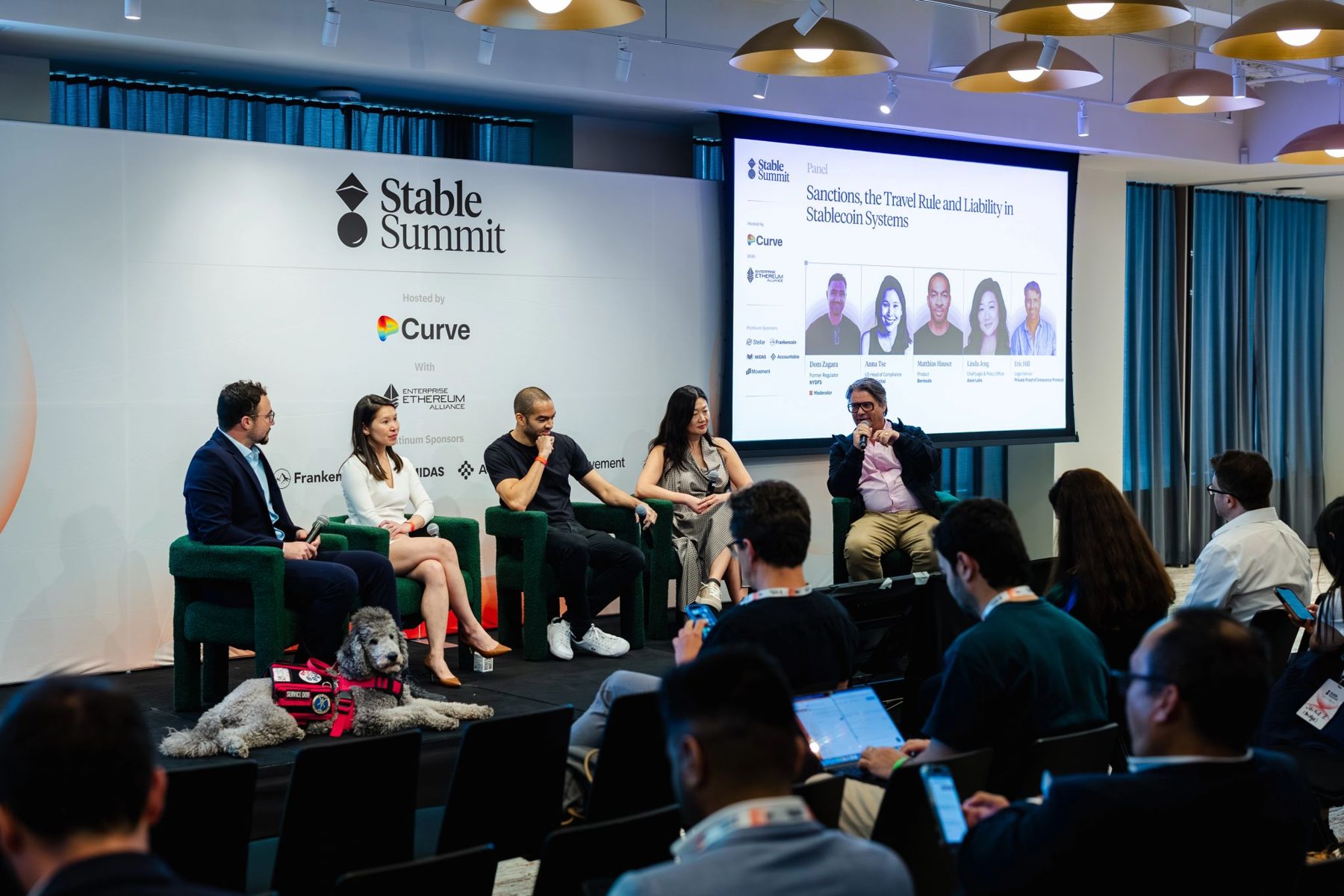
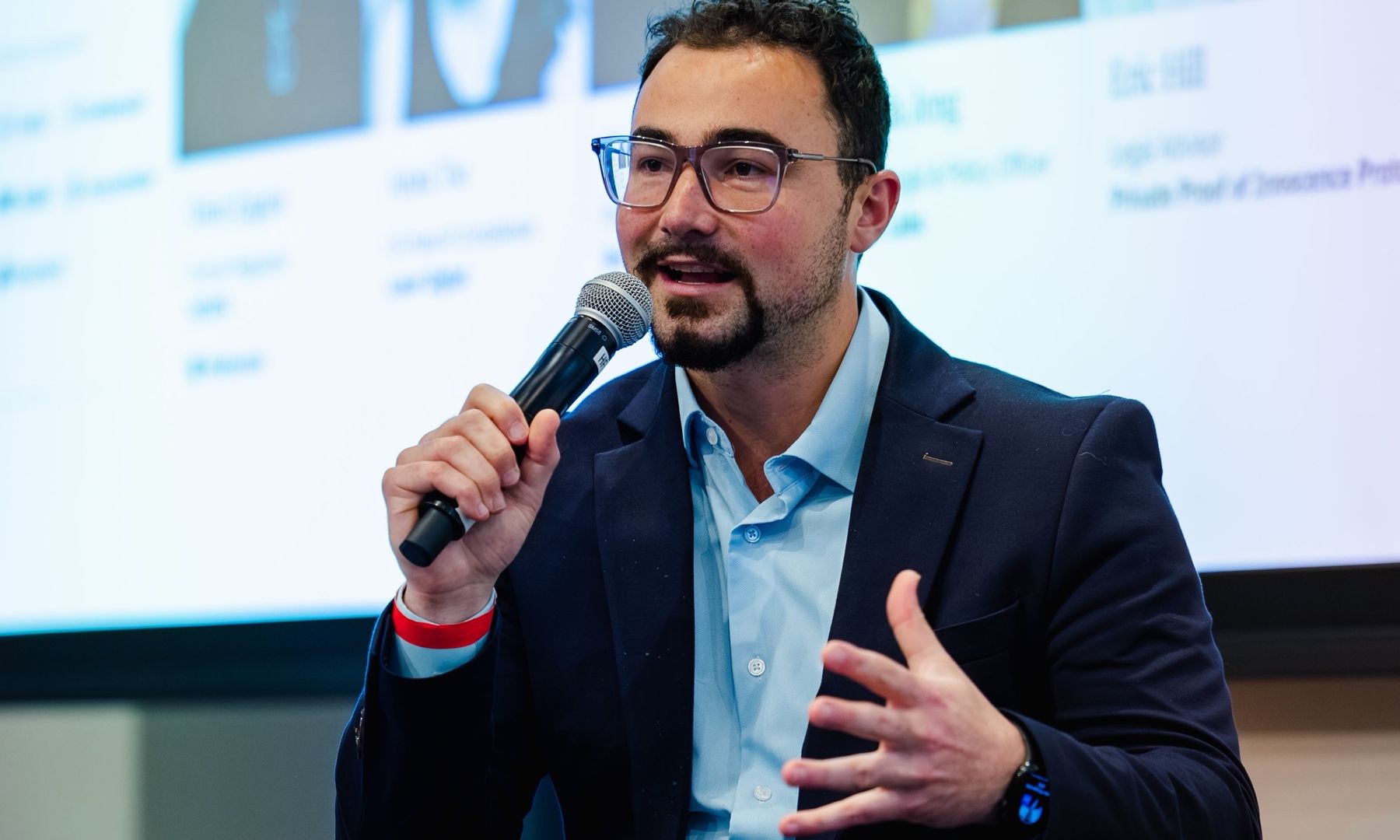
The Sanctions, the Travel Rule and Liability in Stablecoin Systems panel on stage at Stable Summit, five speakers seated with Blaze resting at the stage edge Dominic moderating the panel, holding a microphone and gesturing, with the speaker slide behind him
Stable Summit · 4 June 2026 · Hosted by Curve with the Enterprise Ethereum Alliance
Side note: this photo caused me to reevaluate my facial hair choice.

4 June 2026 · Stable Summit

Sanctions, the Travel Rule and liability in stablecoin systems

ModeratorSanctionsTravel RuleLiability

Moderating the question the industry keeps deferring: when sanctioned funds move through a stablecoin system, who is actually on the hook — the issuer, the wallet, the protocol, or the institution at the edge?

The Travel Rule gives an answer for regulated intermediaries and says nothing about the rest of the stack. That gap is where liability quietly accumulates, and the panel spent most of its time there.

On the panel

  1. Jón EgilssonCo-Founder, Monerium
  2. Matthias HauserProduct, Bermuda
  3. Eric HillHead of Legal & Policy, Railgun
  4. Linda JengChief Legal & Policy Officer, Aave
Compliance doesn't need to see everything. It needs to know who answers when something moves.
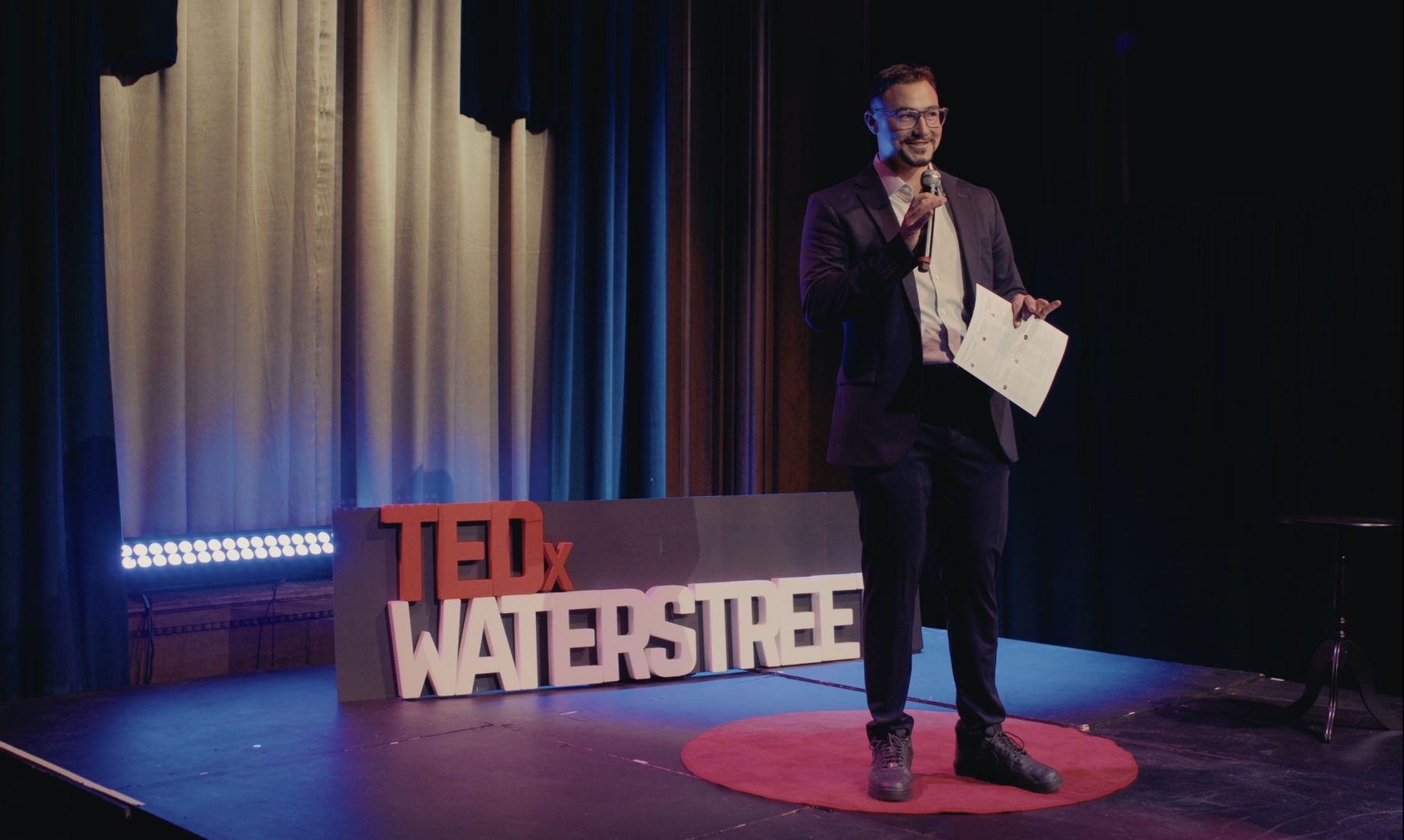
Dominic hosting TEDxWaterStreet on stage beside the TEDxWaterStreet sign and red circular carpet
TEDxWaterStreet 2026 · 15 May 2026 · New York

15 May 2026 · New York, Financial District

TEDxWaterStreet 2026 — Fluidity: An Exploration of Change, Identity, and Society

CuratorTEDxSix speakers

A meditation on the nature of change and the identification of opportunity. Rigid structures and ideas are resistant to change, not immune — persistent flow can force mountains into canyons.

In the intro I traced the tectonic forces that raised the Rocky Mountains about 50 million years ago, and the Colorado River that cut the Grand Canyon 5 million years ago. With enough time, patience, and flow, the most rigid structures change.

Part of the magic of a TEDx event is the multidisciplinary lineup — documentary filmmakers to agentic AI founders, each sharing a perspective on change.

With enough time, patience, and flow, the most rigid structures will change.

Filmed by Matchbox Media.

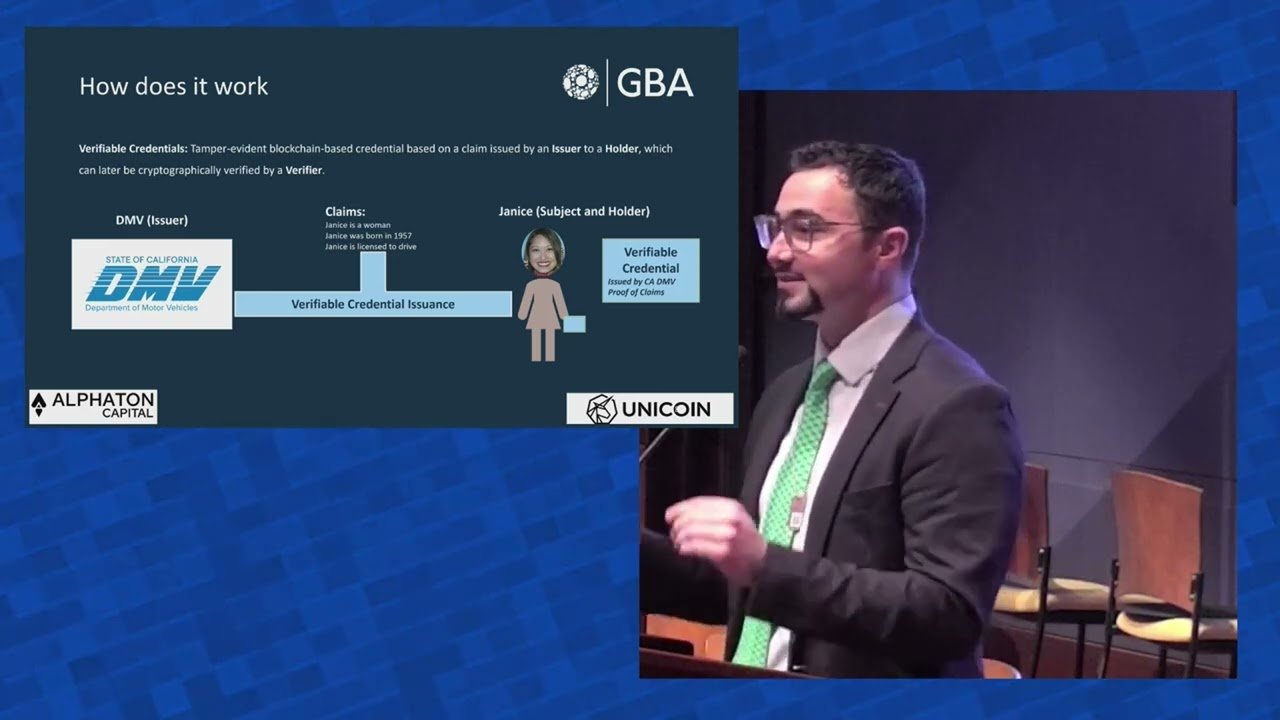
Dominic speaking at the GBA Blockchain Showcase beside a slide explaining how verifiable credentials are issued by the California DMV to a holder Start With Dogs, Scale to Humans GBA · 6:38 · Watch on YouTube
Blockchain Showcase on Capitol Hill · 2 March 2026

2 March 2026 · Capitol Hill, Washington DC

Start with dogs, scale to humans

SpeakerDigital identityW3C VCs

A talk at the Government Blockchain Association’s Blockchain Showcase on Capitol Hill, introducing decentralized identity and W3C verifiable credentials through the most disarming entry point available: a service dog's vaccination records.

Nearly 80% of US states are already pursuing mobile driver's license initiatives — California's mDL runs on the same W3C verifiable credential framework. The infrastructure for government digital identity is far closer than most rooms assume; what's missing is a low-stakes place to prove the model works before it carries a person's legal identity.

Hence the dog. Pet health credentials are a real, bounded problem with real verifiers — vets, groomers, borders — and none of the consequences of getting a human ID wrong on the first try.

Start where a mistake is survivable. That's how you earn the right to issue someone's identity.

Related: the state digital ID rollout post.

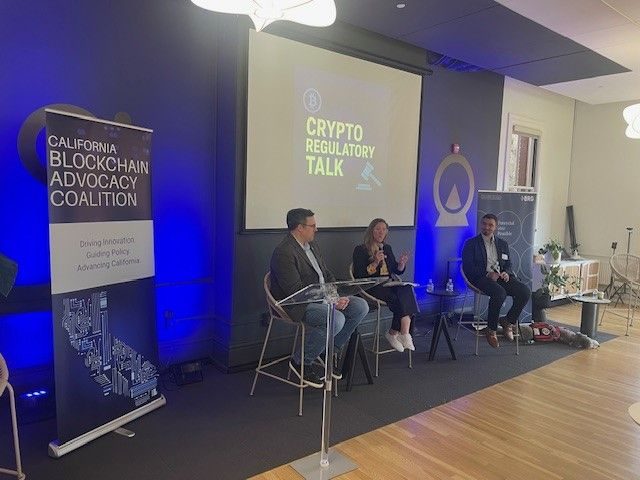
The Crypto Regulatory Talk fireside chat in progress, three speakers seated on stage beside a California Blockchain Advocacy Coalition banner
Crypto Regulatory Talk · Edge & Node House of Web3, San Francisco

22 October 2025 · Edge & Node House of Web3, San Francisco

Licensing the future: California's regulatory horizon

Fireside chatDFALCalifornia DFPIBitLicense

A fireside chat on the rollout of California's Digital Financial Asset Law with Brynly Llyr, Deputy Commissioner for DFAL at the California DFPI — who built the state's first crypto licensing program — alongside Michael Hollerich of BRG and Joseph Ciccolo of BitAML and the California Blockchain Advocacy Coalition. The agenda: the DFAL license launch, lessons from New York's BitLicense process, and what California expects of VASPs serving its customers safely and soundly.

In the months before it, Michael Hollerich and I had supported the DFPI in developing the license evaluation criteria for California's crypto companies. With hindsight from the early frameworks and today's regtech — blockchain analytics above all — California built a regulatory approach aligned to the industry's actual risk profile, not to 2015's.

Audience questions kept pulling toward Washington. Worth remembering that DFS's stablecoin guidance from June 2022 largely mirrored what the GENIUS Act codified in 2025 — and my prediction for the CLARITY Act is that it will be inspired by the state frameworks that worked.

The states wrote the rulebook first. Federal law keeps arriving at conclusions New York and California reached years earlier.

Co-hosted by BRG and the California Blockchain Advocacy Coalition, with thanks to Noëlle Becker Moreno at the House of Web3. Announcement · Recap

Booking

Bring Dom to your stage

Keynotes, fireside chats, panel moderation, crisis simulations, and event hosting. Share the event, date, audience, and format.